
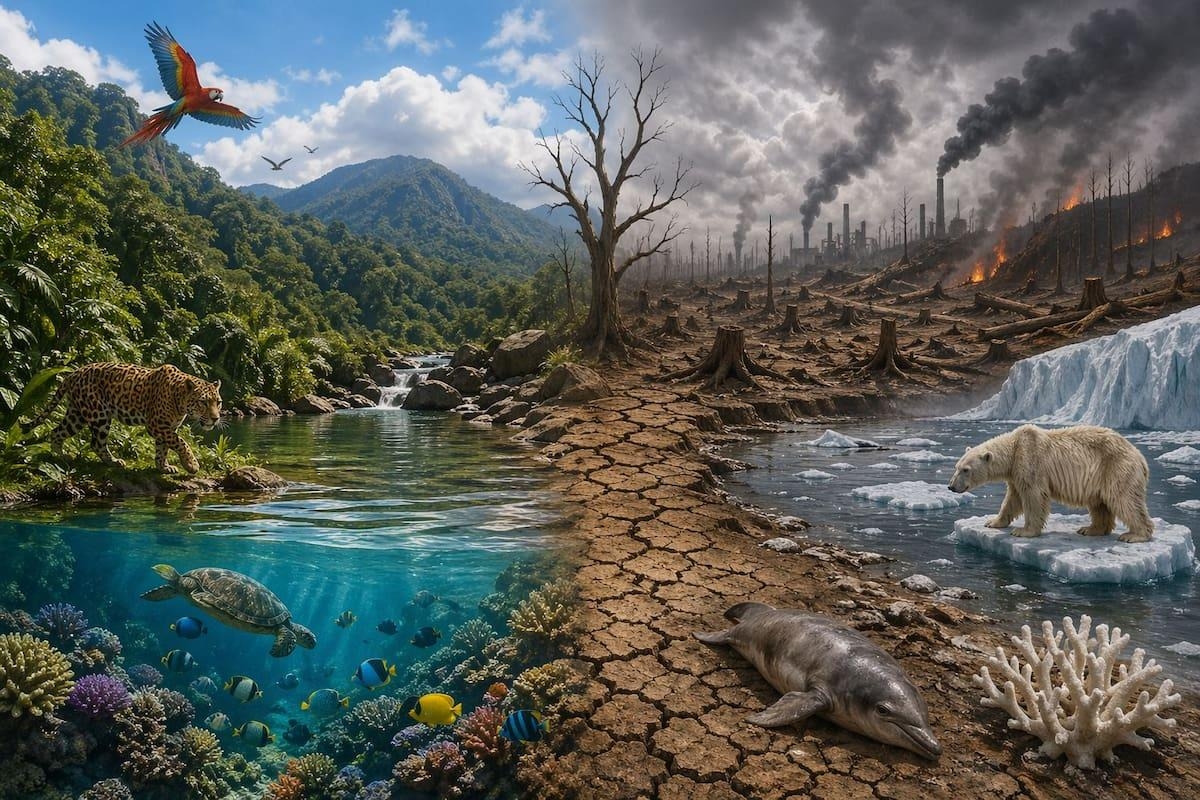
New York, September 24, 2026: A new scientific assessment has renewed global attention on the condition of Earth's natural systems, reporting that seven of the nine planetary boundaries identified by scientists have now been breached. The assessment examines the limits within which Earth systems can remain stable enough to support human societies and ecosystems.
The latest findings identify climate change, biosphere integrity, land-system change, freshwater change, changes to biogeochemical flows, the introduction of novel entities such as synthetic pollutants, and ocean acidification among the areas that have moved beyond their proposed safe limits.
The planetary-boundaries framework was developed to assess major Earth systems that influence environmental stability. The concept identifies nine areas where significant disruption could reduce the planet's capacity to provide a stable environment for human civilisation.
The latest assessment was produced by a team of around 60 scientists led by researchers associated with the Potsdam Institute for Climate Impact Research. Researchers examined the most recent available scientific data to assess the condition of the nine boundaries.
According to the assessment, only stratospheric ozone depletion and atmospheric aerosol loading have shown improvement compared with previous assessments, although aerosol pollution remains a problem in several parts of the world.
Climate change is one of the planetary boundaries currently outside the proposed safe operating space. Rising concentrations of greenhouse gases, largely associated with human activities, continue to affect temperatures, rainfall patterns, oceans and ecosystems.
Scientists have also highlighted concerns about natural systems that absorb carbon dioxide. Forests and oceans have historically absorbed a significant proportion of human-generated carbon emissions, but researchers warn that their capacity to buffer environmental changes could be weakening.
This makes the protection of forests, wetlands, oceans and other ecosystems important not only for biodiversity but also for climate regulation.
Ocean acidification has become another significant concern. The oceans absorb carbon dioxide from the atmosphere, and increasing carbon dioxide concentrations can alter seawater chemistry.
The latest assessment places ocean acidification among the planetary boundaries that have moved beyond the proposed safe limit. Scientists say continued changes could affect marine organisms and ecosystems, with possible consequences for food systems and coastal communities.
The assessment also identifies biosphere integrity and land-system change as areas of concern. The conversion of forests and other natural habitats for agriculture, infrastructure and urban development can reduce biodiversity and weaken ecosystems.
Healthy ecosystems provide services including water regulation, soil protection, carbon storage and pollination. Damage to these systems can therefore have consequences extending beyond wildlife conservation.
The global findings are relevant to India, where environmental issues include changing rainfall patterns, extreme weather, air pollution, water stress, biodiversity loss and pressure on natural habitats.
Karnataka, for example, is currently dealing with contrasting environmental conditions. While parts of the state have recently experienced significant rainfall, the state government has also declared 177 taluks drought-affected, illustrating the complex and uneven nature of water and climate conditions across regions.
The India Meteorological Department has also reported changing rainfall conditions in Karnataka, including periods of heavy rain associated with a developing low-pressure area over the Bay of Bengal.